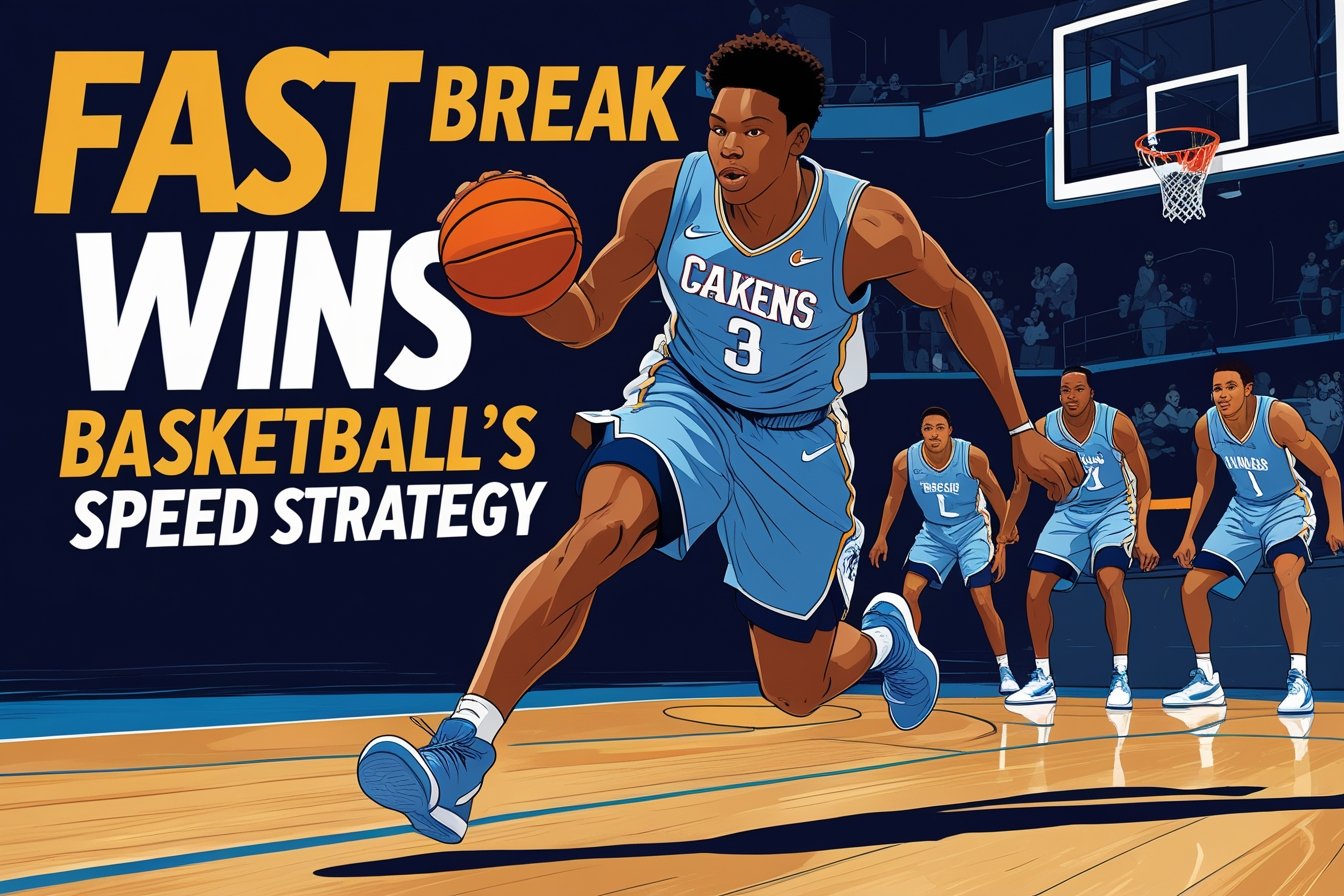
Basketball today is all about pace. Teams with quick hands and fast feet can turn a game around in seconds. Using speed to make fast breaks gives teams a real edge. It energizes players, surprises opponents, and can change the game’s flow instantly. Many top pro teams now focus on playing fast. Speed isn’t just an exciting way to score; it’s a winning tactic. When executed well, fast breaks help score more points, build momentum, and wear down defenses over time.
What Is a Fast Break in Basketball?
Definition and Basic Principles:
A fast break is basically a quick attack right after getting the ball back. Whether it’s a rebound, turnover, or steal, the goal is to score before the defense can set up. It’s all about transition offense, pushing the ball up the court fast and slicing through defenders.
Fast breaks require players to stay alert. They must correctly read the game situation, pick the best passing lanes, and finish strong at the hoop. Speed and timing are everything in this game-changing move.
The Historical Evolution of Fast Break Strategy:
Fast breaks have been part of basketball since the game’s early days. At first, coaches encouraged quick passes and fast pushing to score before the other team could catch up. Over time, teams started analyzing how to make these plays more effective with better skills and tactics.
Famous coaches like Phil Jackson and teams like the Golden State Warriors mastered the art of speed. They turned fast breaks into a staple of their winning strategies, making pace an essential part of modern basketball.
The Mechanics of Fast Breaks:
Initiating the Fast Break:
Most fast breaks start with a defensive rebound or a turnover. If your team grabs a missed shot or steals the ball, everyone should sprint up the court immediately. The point guard often starts the attack, quickly pushing the ball to a teammate or moving it themselves.
Wing players and shooters also play key roles. They need to get open and be ready for a quick pass or to take a shot on the move. The faster they get up the court, the more chances they have to score.
Executing an Effective Fast Break:
Once the fast break is on, players must pass sharply and move with purpose. Good court awareness helps them see open lanes or teammates better positioned. Quick decision-making under pressure keeps the play flowing smoothly.
Maintaining speed is crucial, but so is security, players must control the ball and avoid careless mistakes. Kicking the ball ahead with accurate passes often sets the stage for easy scores.
Breaking Down the Play: Common Fast Break Patterns:
There are a few common patterns used during fast breaks:
- 3-on-2: Three offensive players attack two defenders. This gives options for passing or laying it in.
- 2-on-1: Two players versus one defender. This is a great chance to score easily or find a teammate.
- 4-on-3: Four players push ahead against three defenders, creating space and scoring options.
Proper spacing and quick passing help maximize each of these situations, making scoring more likely.
Key Components of a Successful Fast Break Strategy:
Speed and Transition Efficiency:
Speed isn’t just about running fast; it’s about quick transitions. Effective teams make fast outlet passes from rebounding and sprint up the court. Drills that focus on sprinting and passing accuracy help improve this.
Player Skills and Conditioning:
Fast break success depends on every player’s ability to dribble, pass, and finish at the rim. Players also need strong conditioning, so they can keep up high speed throughout the game without tiring. Training should mirror game conditions, emphasizing endurance and agility.
Defensive Transition to Offense:
Fast breaks often start with forcing turnovers. Good defensive schemes, like trapping or press defenses, try to create these mistakes. Quick rebounds and accurate outlet passes get the team sprinting before the defense gets set.
Benefits of Emphasizing Speed in Basketball:
Increased Scoring Opportunities:
Fast breaks often lead to easy points. Stats show teams score more points per fast break than during regular half-court sets. For example, NBA teams that push the pace score roughly 1.2 points more per attempt on fast breaks.
Psychological Impact on Opponents:
Fast-paced play wears down opponents. They grow tired or rush shots, leading to mistakes. Quick scoring runs can crush the other team’s confidence and shift momentum fast.
Fatigue and Endurance Advantages:
Playing at a high pace boosts stamina. Teams that condition for speed can outlast opponents in the final moments. Well-trained players sustain their quickness longer, making fast breaks more frequent and deadly.
Challenges and Limitations of Fast Break Strategy:
Risk of Turnovers and Poor Shot Selection:
Speed can lead to mistakes. Pushing too hard or rushing passes increases turnovers. Coaches must teach players when to slow down and set up a better shot.
Need for High-Level Player Skills:
Every player must understand fast-break principles. Skills like accurate passing, quick decision-making, and finishing under pressure are a must. Poor execution can turn potential points into turnovers.
Situational Use and Game Flow:
Fast breaks work best when the team is ahead or tied, but not when leading by a large margin. Recognizing the best time to push the pace, based on game score or clock, is key.
Expert Insights and Case Studies:
Coaches’ Perspectives on Speed Strategy:
Top coaches agree that speed creates an advantage. They stress the importance of training players to read the game quickly and execute fast breaks flawlessly. “Fast breaks are about energy and numbers,” says NBA coach Mike D’Antoni.
Case Studies of Successful Fast Break Teams:
The Golden State Warriors and San Antonio Spurs have used speed to dominate. The Warriors, in particular, excel at turning turnovers into quick points with their fast-paced style. Their emphasis on transition offense often results in both easier scores and demoralized defenses.
Analyzing games from their seasons shows how speed and transition plays built winning streaks and secured playoff wins.
Actionable Tips for Teams Improving Fast Break Efficiency:
- Run drills that focus on sprinting the court and quick passes.
- Invest in conditioning programs to sustain a relentless pace.
- Create a set of fast break plays tailored to your team’s strengths.
- Use game footage to identify and correct slow or rushed plays.
- Cultivate a culture that emphasizes quick thinking, communication, and trust.
Conclusion:
Speed is more than just a flashy move in basketball. It’s a potent strategy that can turn games around. Fast breaks open scoring chances, boost team energy, and can destabilize opponents. But making them work takes skill, sharp decision-making, and great conditioning. Incorporate fast break principles into your game plan, and you’ll see the difference. It’s a simple yet powerful way to beat the odds and score more points. Keep pushing for quickness and smart plays, you might just dominate with the speed advantage.
FAQs:
1. What is a fast break in basketball?
A fast break is a quick offensive move after gaining possession, aiming to score before the defense can get set.
2. Why is speed so important in modern basketball?
Speed creates scoring opportunities, wears down opponents, and shifts game momentum in your favor.
3. How do fast breaks usually start?
They begin after a rebound, steal, or turnover—followed by quick outlet passes and sprinting up the court.
4. What are the common fast break patterns?
Popular patterns include 3-on-2, 2-on-1, and 4-on-3 setups, which give the offense a numbers advantage.
5. What skills are needed to run effective fast breaks?
Players need strong conditioning, sharp passing, good court awareness, and the ability to finish quickly under pressure.
6. Are there risks to using a fast break strategy?
Yes. Poor timing or rushed passes can lead to turnovers or bad shot choices, making execution and discipline essential.